
Bowel leakage or difficulty controlling wind
Services
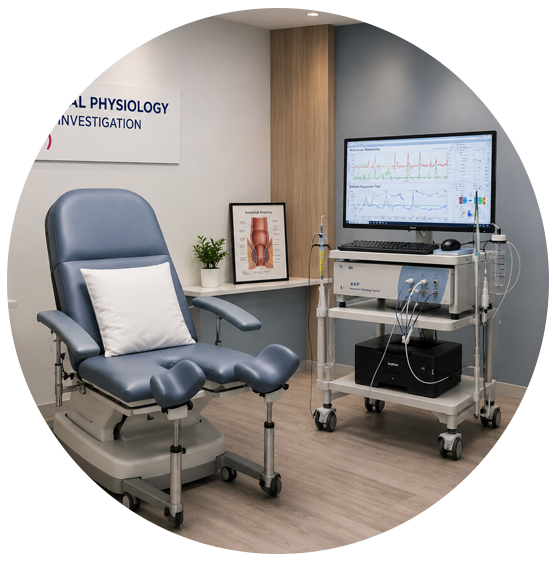
Anorectal Physiology-In room Investigation
Anorectal physiology testing assesses how the rectum, anal sphincter, pelvic floor muscles and associated nerves are functioning. It may be performed together with pelvic floor ultrasound, which provides images of the muscles and surrounding structures.
Anorectal refers to the anal canal and rectum, which are the parts of the bowel just inside your bottom.
Why is ARP performed?
Your specialist may recommend ARP to help investigate symptoms or conditions such as:
Constipation or difficulty emptying the bowel
Obstructed defaecation
Rectal or pelvic organ prolapse
Anal fistula or fissure
Pelvic floor dysfunction
The findings can assist your treating clinician in understanding your symptoms and planning appropriate management.
How do I prepare for an anorectal physiology test?
You don’t need to do anything to prepare – although it’s advisable to try to empty your bladder beforehand.
Since the tests don’t require any sedation, you can drive yourself to and from the appointment.
What happens during an anorectal physiology test?
You’ll be asked to remove the clothing on your lower half and lie on your left side with your knees bent. A small probe is gently inserted into the anal canal. You will be asked to rest, squeeze and bear down while the probe measures anal sphincter strength, coordination and rectal sensation.
The results may help identify factors contributing to bowel leakage, constipation or difficulty emptying the bowel and guide treatment such as pelvic floor physiotherapy or biofeedback.
What happens after an anorectal physiology test?
Once the testing is finished, you’ll be able to drive or take public transport, and go about your normal activities.
A report will be created based on the outcomes from your procedure. The doctor will discuss the results with you over a phone follow up appointment. If you were referred for these tests by another doctor, your results will be sent to them.
Are there any risks with anorectal physiology tests?
Anorectal physiology tests are safe, low risk procedures that are unlikely to cause any pain.
Please let your nurse know if you do experience any pain or discomfort, or if you wish to pause during the tests.
Be assured that complications from anorectal physiology tests are rare. However, there is a possibility that the rectum could tear or bleed. Another remote possibility is equipment failure.
If you’re allergic to latex, do let us know when you arrive for your appointment. Your team can then make the easy switch to latex-free PPE.