
Bright red blood on toilet paper or in the toilet bowl after a bowel motion
Blogs
Haemorrhoids
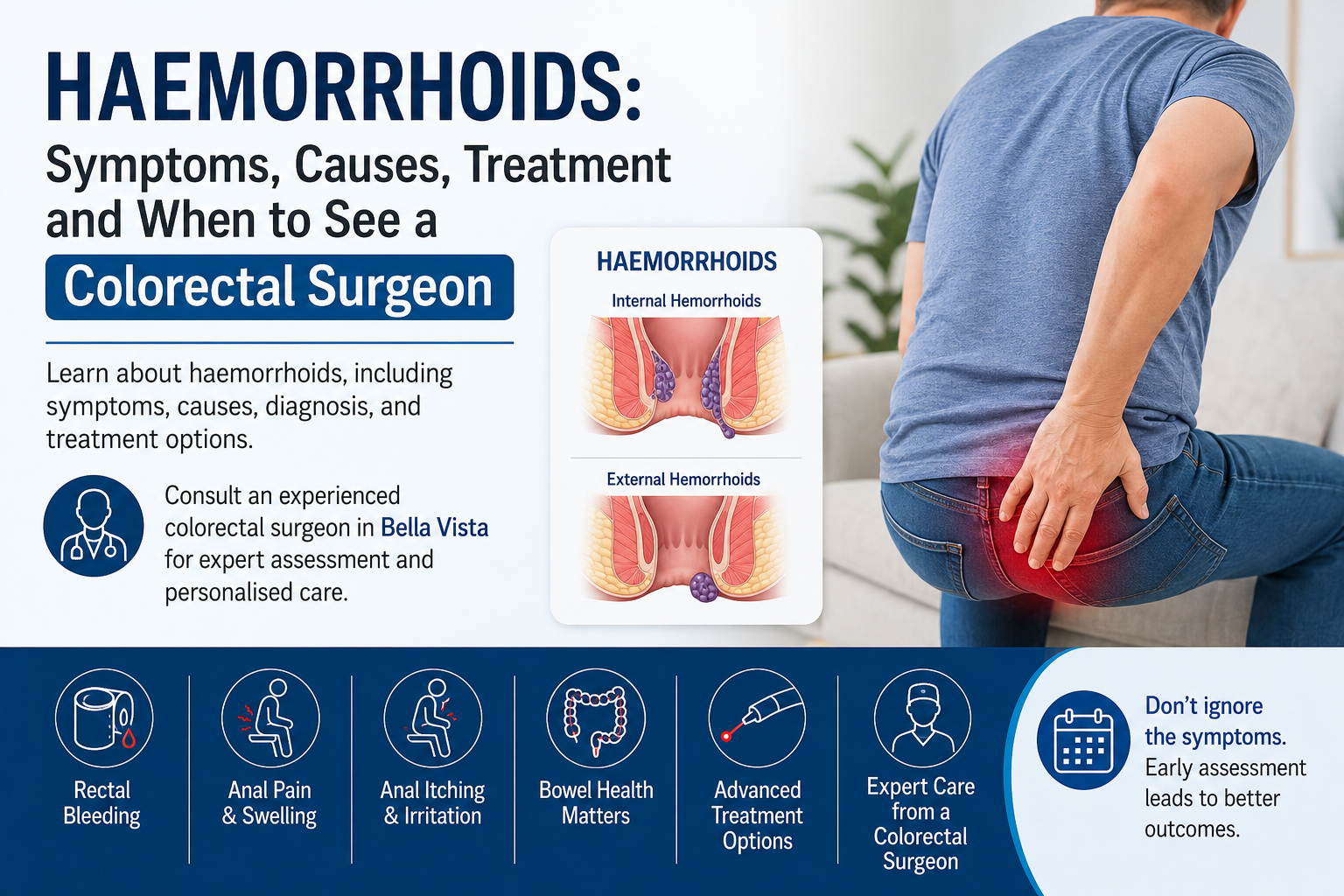
Haemorrhoids: Symptoms, Causes, Treatment and When to See a Colorectal Surgeon
Haemorrhoids, sometimes called piles, are a common condition affecting the anal canal and lower rectum. Many people experience symptoms at some stage, but embarrassment can sometimes delay assessment.
This guide explains what haemorrhoids are, why they may occur, and what treatment options may be considered.
What Are Haemorrhoids?
Haemorrhoids are vascular cushions found normally in the anal canal. They help with continence. They become a problem when they enlarge, become inflamed, bleed, or prolapse.
Haemorrhoids may be internal or external. They may also be graded from I to IV depending on the degree of prolapse. This can help guide treatment options.
Types of Haemorrhoids
Internal haemorrhoids — these occur inside the rectum and may cause bleeding or prolapse. They are often not painful.
External haemorrhoids — these occur under the skin around the anus and may cause pain, swelling, itching or irritation.
Common Symptoms of Haemorrhoids
Itching or irritation around the anus
Pain or discomfort, especially when sitting
A lump or swelling near the anus
Mucus discharge
Prolapse or tissue protruding from the anus
Important Note About Rectal Bleeding
Rectal bleeding should not automatically be assumed to be due to haemorrhoids. Although haemorrhoids are a common cause of bleeding, bleeding may also occur with other bowel conditions. New, persistent or unexplained rectal bleeding should be assessed by a healthcare professional.
What Causes Haemorrhoids?
Several factors may contribute to haemorrhoid symptoms, including straining during bowel motions, constipation or diarrhoea, sitting on the toilet for long periods, low fibre intake, pregnancy and childbirth, age-related weakening of supporting tissues, heavy lifting or repeated straining, and family history.
How Are Haemorrhoids Diagnosed?
A colorectal surgeon will usually take a detailed history and perform an examination. This may include a digital rectal examination.
Further investigations, such as colonoscopy, may be recommended depending on your symptoms, age, family history and other risk factors. This is particularly important when there is rectal bleeding or a change in bowel habit.
Treatment Options for Haemorrhoids
Treatment depends on the type, severity and impact of symptoms. Many people improve with conservative measures, while others may need in-room investigations or surgery.
Conservative Management
Increasing dietary fibre
Drinking adequate fluids
Avoiding straining and prolonged sitting on the toilet
Using topical creams or suppositories for short-term symptom relief
Warm baths or sitz baths
Dietitian input and pelvic floor physiotherapy where appropriate
Surgical Treatment
For haemorrhoids that do not settle with conservative treatment, patients may require surgical treatment.
Surgery may be considered for larger, prolapsing, thrombosed or persistent haemorrhoids, particularly when other treatments have not provided adequate improvement.
Treatment options may include minimally invasive techniques such as laser-assisted haemorrhoid procedures, haemorrhoidal artery ligation, banding and injection sclerotherapy. Occasionally patients may need conventional excisional haemorrhoid surgery.
Your colorectal surgeon will discuss the potential benefits, risks, alternatives and recovery considerations based on your individual circumstances.
When Should You See a Specialist?
Rectal bleeding
Persistent pain, swelling or a lump near the anus
Symptoms that do not improve with simple measures
A change in bowel habit
Recurrent or worsening haemorrhoid symptoms
A family history of bowel cancer or bowel polyps
Haemorrhoid Assessment at Elevio
Haemorrhoids are common and treatable, but it is important not to self-diagnose rectal bleeding. A proper assessment can help identify the cause of your symptoms and guide appropriate treatment options.
At Elevio Pelvic Floor and Colorectal Clinic, patients can receive specialist colorectal assessment and personalised care for haemorrhoids and other anorectal conditions.
Disclaimer
This information is general in nature and does not replace individual medical advice. If you have rectal bleeding, persistent pain, or a change in bowel habits, please seek assessment from your GP or an appropriate healthcare professional.
Related Topics
Haemorrhoids
Haemorrhoids Symptoms
Haemorrhoids Causes
Haemorrhoids Treatment
Piles Treatment
Internal Haemorrhoids
External Haemorrhoids
Bleeding Haemorrhoids
Prolapsed Haemorrhoids
Thrombosed Haemorrhoids
Rectal Bleeding
Anal Pain
Anal Itching
Colorectal Surgeon Bella Vista
Colorectal Specialist
Colonoscopy
Laser Haemorrhoid Treatment
Rubber Band Ligation
Injection Sclerotherapy
Haemorrhoid Surgery
Pelvic Floor Physiotherapy
Rectal Health
Colorectal Clinic